
What is Kalsarpa Yoga? Meaning, Types, Effects and Complete Guide
Published: March 22, 2026
Kalsarpa Yoga is one of the most searched and most misunderstood concepts in Vedic astrology. It is often described in fear‑based language, but a responsible approach is very different. This guide explains what Kalsarpa Yoga actually means, how it is formed, how the different types work, what effects people may feel, and what practical remedies actually help.
Quick takeaways:
- Kalsarpa Yoga is about the Rahu‑Ketu axis and concentrated life focus.
- It is a factor, not a final verdict or curse.
- Chart context, strength, and exceptions matter.
- Practical discipline and clarity reduce intensity.
Disclaimer: This content is for general educational purposes only and is not medical, legal, or financial advice. Use your own judgment and consult qualified professionals when needed.
Table of Contents
Kalsarpa Yoga Meaning
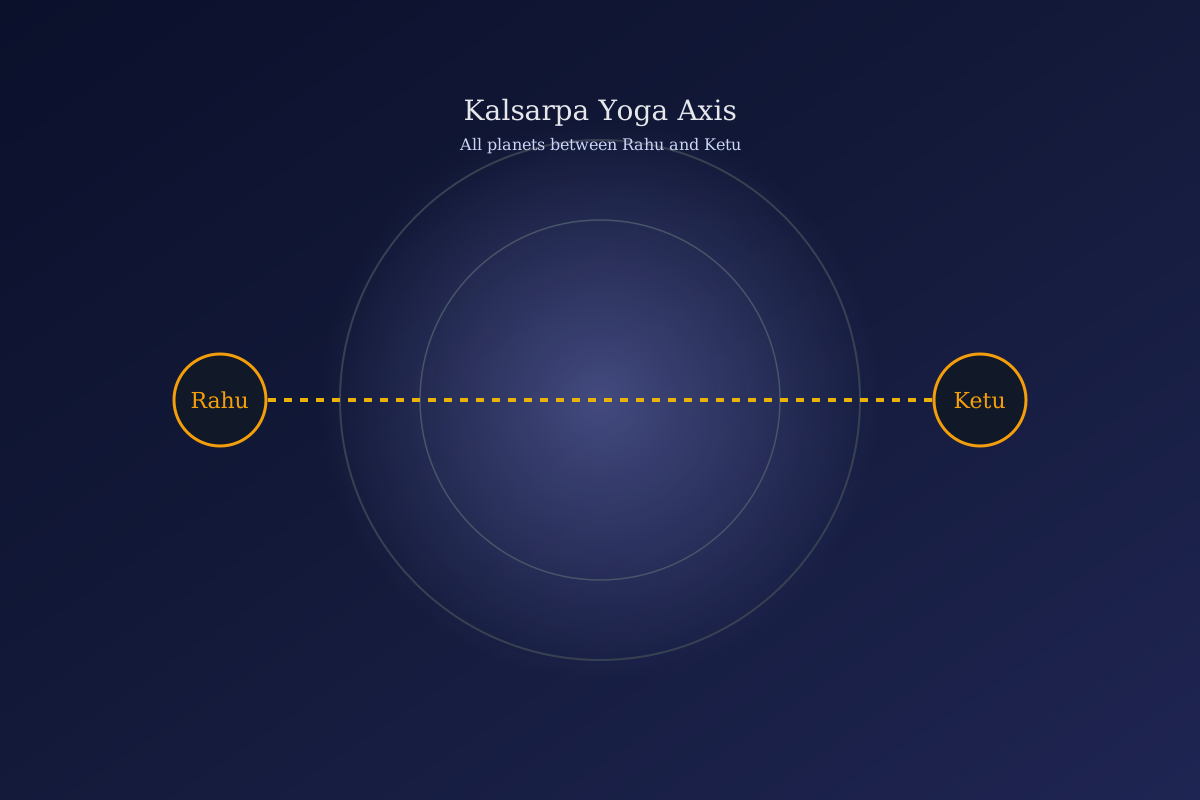
Kalsarpa Yoga forms when all planets are placed between Rahu and Ketu in a chart. This creates a “single‑axis” focus in life. The person often feels pulled toward intense experiences, sharp learning cycles, and deep karmic themes. But that does not automatically mean suffering. It means concentration of energy.
The biggest misunderstanding is to assume Kalsarpa Yoga destroys success. Many people with Kalsarpa Yoga have strong achievements because the focus becomes intense. The real question is whether the focus is directed wisely or chaotically. That is what determines the outcome.
How Kalsarpa Yoga Forms
Rahu and Ketu always sit opposite each other. If all planets fall inside the arc between them, Kalsarpa Yoga is said to be present. Some traditions require the Sun and Moon to also be within the axis. Other traditions allow partial exceptions or consider strength, conjunctions, and aspects before confirming the yoga.
This is why a responsible evaluation matters. A strict yes/no label is not enough. It is better to ask: “How strong is Rahu‑Ketu? Which houses do they occupy? Do they receive support or affliction?” Only then can you understand the real impact.
Rahu and Ketu represent the karmic axis: Rahu shows appetite, desire, and growth through experimentation, while Ketu shows detachment, past experience, and a push toward inner mastery. When all planets fall between them, life themes often feel concentrated. This can feel intense, but it can also feel like clear direction if the person commits to disciplined action.
Kalsarpa Yoga is therefore not only about “problems.” It is about intensity and focus. If you channel that focus into one meaningful path, it becomes strength. If you scatter it across too many directions, it becomes stress.
Rahu‑Ketu Axis: The Core Idea
Understanding Rahu and Ketu is essential. Rahu represents the future‑pull: ambition, unconventional choices, and strong desire. Ketu represents the past‑pull: detachment, reduction, and the urge to simplify. When the full chart is squeezed between them, you often experience a tension between ambition and detachment.
This tension can feel like “I want to do more” and “I am tired of everything” at the same time. That push‑pull is a common experience in Kalsarpa Yoga charts. The remedy is structure: pick one path, build routines, and avoid impulsive changes. The axis then becomes a powerful focus tool.
Kalsarpa Yoga vs Partial Kalsarpa
Some charts show all planets within the Rahu‑Ketu axis, while others show one or two planets slightly outside. Many astrologers call this “partial Kalsarpa.” The intensity is usually lower in partial cases, and the yoga’s effect is more conditional. This is why a strict label is risky without checking degrees and exceptions.
If one strong benefic sits outside the axis, it can provide relief. If a strong malefic sits outside, it can create different stress patterns. The real answer is always chart context, not just the label.
Types of Kalsarpa Yoga
There are 12 traditional types, named by the house placement of Rahu and Ketu. The names are symbolic, and the practical effects depend on house emphasis. Below is a simplified, practical summary.
Anant: Focus on self‑identity and personal direction. Can create intense self‑analysis.
Kulik: Emphasis on finances, speech, and family values. Pushes financial discipline.
Vasuki: Effort, courage, and communication pressure. Requires disciplined action.
Shankhpal: Home, emotional security, and inner stability themes.
Padma: Creativity, intelligence, and children‑related responsibilities.
Mahapadma: Service, health routines, and problem‑solving focus.
Takshak: Partnerships, commitments, and relationship intensity.
Karkotak: Transformation, hidden fears, or deep psychological shifts.
Shankachood: Principles, guidance, and dharma‑related learning.
Ghatak: Career responsibility, role pressure, long‑term credibility.
Vishdhar: Gains, networks, social responsibility.
Sheshnag: Isolation, spiritual focus, or detachment from excess.
Effects on Life Areas
Kalsarpa Yoga often makes life feel intense or “all‑or‑nothing.” The effect depends on how you handle focus, discipline, and emotional balance. Below is a practical breakdown:
Career: You may experience rapid shifts or intense focus. If you pick one direction and stay disciplined, results can be strong. If you scatter energy, confusion rises.
Relationships: Relationships can feel karmic or fated. The key is communication and emotional regulation to avoid extremes.
Money: Financial patterns may fluctuate. Budgeting and conservative planning reduce stress. Avoid impulsive risk.
Health & Mind: Anxiety or overthinking can increase if routines are weak. Stable daily habits reduce intensity.
Think of these effects as signals, not predictions. The yoga does not force bad outcomes; it amplifies what you already do. If you build strong systems, the same intensity becomes stable progress.
How Kalsarpa Yoga Feels in Daily Life
Many people describe this yoga as a cycle of extremes: strong ambition followed by sudden doubt, intense focus followed by fatigue, and periods of rapid growth followed by slow consolidation. This is the Rahu‑Ketu axis at work — the push‑pull between desire and detachment.
The key is to build rhythm. When your daily life is structured — consistent sleep, fixed work blocks, and clear priorities — the extremes soften. Kalsarpa Yoga then feels like a focused drive rather than chaos.
Decision‑Making Framework for Kalsarpa Yoga
One of the strongest remedies is improved decision‑making. Use a simple three‑step framework:
1. Clarify the goal: write down what you want in one sentence. 2. Check stability: can you sustain this choice for 6–12 months? 3. Commit and review: act consistently and review weekly.
This framework prevents the common Rahu‑driven mistake: chasing many things at once. A single stable goal often produces better outcomes than five impulsive starts.
Career Focus and Kalsarpa Yoga
Career success with Kalsarpa Yoga is possible, but it requires focus. People with this yoga often experience sharp rises and falls when they chase multiple directions. The most effective strategy is to choose one area of mastery and build depth.
A practical career plan:
1. Choose a core skill and improve it for 12 months. 2. Document progress weekly. 3. Avoid impulsive job changes unless stability is guaranteed. 4. Build long‑term credibility through consistent output.
This aligns Rahu ambition with Saturn‑style discipline, creating stable growth.
Relationships and Emotional Regulation
Relationships can feel karmic or intense during Kalsarpa Yoga. This is not necessarily negative, but it demands emotional regulation. When intensity rises, clear communication becomes essential.
A simple weekly ritual helps: one appreciation, one concern, and one request. This prevents misunderstanding and keeps relationships stable. Avoid dramatic reactions; practice patience and clarity instead.
Money and Risk Management
Rahu energy often pulls toward risk or sudden gains. Ketu pulls toward detachment. This can create unstable money decisions. The remedy is budgeting and steady investment. Avoid high‑risk speculation and short‑term gambling.
Build an emergency buffer, keep fixed savings, and plan long‑term. Financial stability reduces the anxiety that Kalsarpa Yoga can amplify.
Daily Routine That Stabilizes Kalsarpa Yoga
A simple daily routine makes a huge difference:
1. Fixed wake‑up and sleep time. 2. One focused work block with no distractions. 3. Short exercise or walk to ground energy. 4. Daily review: what worked, what needs correction.
These steps reduce mental volatility and create a stable base for growth.
Common Myths
Myth: Kalsarpa Yoga guarantees failure. Reality: it amplifies focus, which can create success or stress depending on choices.
Myth: Rituals alone remove the yoga. Reality: discipline and clarity matter more than rituals alone.
Myth: Everyone with Kalsarpa Yoga is unlucky. Reality: many successful people have it.
Myth: One chart rule decides your entire life. Reality: outcomes depend on multiple factors, especially habits and timing.
Common Mistakes During Kalsarpa Yoga
1. Chasing too many goals at once. 2. Ignoring routines and expecting quick results. 3. Making decisions based on fear rather than structure. 4. Over‑reacting to setbacks instead of learning from them.
Most negative experiences come from these mistakes, not from the yoga itself. Correcting them often brings immediate relief.
Exceptions and Cancellations
Many traditions accept cancellation conditions. If strong benefics aspect the axis, or if planets are tightly conjunct Rahu or Ketu, the yoga may weaken. Some astrologers do not consider Kalsarpa Yoga if certain planets sit outside the axis within close degrees. This is why a professional chart reading is safer than a quick label.
Another important factor is dasha timing. Even with Kalsarpa Yoga, if your dasha is supportive, results can be constructive. If dasha is harsh, intensity increases. Context is everything.
Also remember: if planets are positioned very close to the axis but technically outside, many astrologers reduce the yoga’s impact. These nuances are why a “yes/no” answer often misleads people.
Remedies and What Actually Helps
The most effective remedies are practical: structured routine, clear goals, emotional regulation, and steady discipline. Rahu‑Ketu energy is intense; it needs direction. If you build structure, intensity turns into focus.
Spiritual remedies (charity, mantra, temple visits) can help when combined with real‑life responsibility. But the strongest remedy is consistent behavior: finish what you start, reduce chaos, and avoid impulsive risk.
A practical remedy sequence:
1. Create a stable daily routine. 2. Choose one primary goal and commit to it. 3. Reduce distractions and unnecessary commitments. 4. Track progress weekly, not daily. 5. Practice emotional regulation in relationships.
A deeper remedy plan includes:
Layer 1: Stability — fix sleep, finances, and time management. Layer 2: Focus — keep one core goal active until results appear. Layer 3: Integrity — keep promises, avoid shortcuts, and act consistently.
Kalsarpa Yoga and Dasha Timing
Dasha periods can amplify or soften Kalsarpa Yoga. When Rahu or Ketu dasha runs, the intensity often increases. When benefic dashas run, the same yoga can feel productive. This is why timing matters more than labels.
If you are in a difficult dasha, use it as a review phase. Build structure, reduce risk, and focus on learning. This will prepare you for smoother periods later.
Kalsarpa Yoga and Transit Triggers
Some people notice stronger effects when Rahu‑Ketu transits activate key houses or when Saturn transits create pressure. These are temporary intensifiers. The best approach is consistent habits rather than fear.
If you are also in a Saturn period, read Sade Sati Explained and Shani Dhaiya Explained to understand how Saturn discipline can help stabilize Kalsarpa intensity.
Mini Case Examples (Realistic, Not Predictive)
Example 1: A professional with Kalsarpa Yoga feels intense career swings. They reduce side projects and focus on one skill. Within a year, stability improves and outcomes become predictable.
Example 2: A student experiences anxiety and indecision. They build a fixed study routine and track weekly progress. The anxiety reduces as structure increases.
Long‑Term Benefits of Kalsarpa Yoga
When handled well, Kalsarpa Yoga can create strong focus, resilience, and the ability to master complex tasks. Many people report that after building discipline, their results become stronger than average because their energy is concentrated instead of scattered.
The yoga therefore becomes a training ground. It teaches you how to handle intensity with structure — a skill that benefits every part of life.
How to Check Kalsarpa Yoga
Use your chart to see if all planets fall between Rahu and Ketu. You can generate your chart using our Kundli tool, then check planetary placements. If any planet lies outside the Rahu‑Ketu axis, classical Kalsarpa Yoga may not apply.
If you are unsure, focus on the behavioral themes rather than the label. The goal is to improve your decisions, not fear the chart.
Kalsarpa Yoga in Marriage and Relationships
Kalsarpa Yoga can make relationships feel intense or “fated.” This can be positive when both partners practice emotional balance, but it can create conflict when expectations are unclear. The most reliable remedy is structured communication and steady patience.
If you are also dealing with relationship‑related yogas, read Mangal Dosha Explained for clarity. Many relationship tensions are resolved more by communication habits than by a single chart label.
Mental Health and Emotional Pressure
People with Kalsarpa Yoga sometimes report anxiety, overthinking, or restlessness. This often comes from the Rahu‑Ketu push‑pull: intense ambition mixed with sudden detachment. The remedy is not avoidance — it is grounding.
Grounding methods include: consistent sleep timing, mindful exercise, and a short daily reflection habit. Even ten minutes of structured self‑review can reduce overthinking significantly.
Do’s and Don’ts (Practical Rules)
Do: set one clear goal, build a routine, keep weekly progress logs, and maintain emotional balance.
Don’t: chase multiple directions, make impulsive promises, or ignore finances.
These simple rules prevent most of the anxiety commonly attributed to Kalsarpa Yoga.
One‑Page Summary (Fast Review)
Kalsarpa Yoga means all planets fall between Rahu and Ketu. This creates intensity and focus. The outcome is determined by discipline, clarity, and chart context. When handled responsibly, it can become a strong path of mastery rather than stress.
The most reliable strategy is: reduce chaos, build one stable goal, and stay consistent for at least 6–12 months. This converts intensity into real progress.
Daily Checklist (5 Minutes)
1. Write the top priority for today. 2. Confirm one important commitment. 3. Avoid one unnecessary distraction. 4. Do one grounding activity (walk, stretch, breath). 5. Note one improvement for tomorrow.
These micro‑actions are simple but powerful. Rahu‑Ketu intensity calms down when your days are predictable.
Combining Practical and Spiritual Remedies
Many people use mantras or charity during Kalsarpa Yoga. These can be meaningful, but they work best when paired with real‑world structure. A balanced approach looks like this: spiritual practice for calm + disciplined routine for stability. This reduces anxiety and builds confidence.
After Kalsarpa Yoga: What Changes
When you handle Kalsarpa Yoga well, you often notice stronger decision‑making, clearer priorities, and better emotional balance. The key benefit is focus. People who build discipline during this period often keep those habits long after the intensity fades.
Many people also report improved self‑trust. Once you learn to handle intensity without panic, your confidence becomes more stable. That inner stability is often the most valuable outcome.
Kalsarpa Yoga for Students and Learners
Students often feel pressure during Kalsarpa Yoga, but it can become a strong learning phase if used correctly. Use shorter, consistent study sessions, review weekly, and focus on fundamentals. Avoid cramming, which amplifies stress and confusion.
Kalsarpa Yoga for Entrepreneurs
Entrepreneurs may experience unstable growth if they chase too many ideas. The best strategy is focus: build one reliable product or service, strengthen operations, and avoid risky expansion. Kalsarpa Yoga rewards depth over scattered experimentation.
Family Support and Communication
Family pressure can feel intense during Kalsarpa Yoga because Rahu‑Ketu themes often surface through relationships. Honest conversations help. Share your priorities and ask for practical support rather than emotional reassurance. Clear expectations reduce conflict.
If family expectations feel heavy, keep one rule: respond with clarity, not emotion. This prevents the axis intensity from turning into unnecessary conflict.
Key Takeaways (Fast Review)
1. Kalsarpa Yoga concentrates focus; it does not guarantee failure. 2. Structure and routine are the most powerful remedies. 3. Chart context and timing decide intensity. 4. Consistency converts intensity into mastery.
Related Topics
Kalsarpa Yoga is closely linked to Rahu‑Ketu themes and timing. For a connected understanding, read: Sade Sati Explained, Shani Dhaiya Explained, Mangal Dosha Explained, and Mercury Retrograde Explained.
Frequently Asked Questions
Is Kalsarpa Yoga always negative?
No. It intensifies focus. The outcome depends on habits and chart context.
Can Kalsarpa Yoga be canceled?
Some charts show cancellation factors based on aspects, conjunctions, and planet placements.
Is Kalsarpa Yoga the same as Rahu‑Ketu transit?
No. Kalsarpa Yoga is a natal configuration; transits are temporary.
Does everyone with Kalsarpa Yoga face the same results?
No. Results vary based on your chart strength, running dasha, and personal discipline.
Is Kalsarpa Yoga linked with sudden success?
It can be. Intensity and focus sometimes lead to sudden breakthroughs when discipline is strong.
Final Word
Kalsarpa Yoga is not a curse. It is a concentration of energy. When you apply discipline, clarity, and steady effort, the same intensity becomes your strength.
If you stay focused, reduce chaos, and build long‑term routines, this yoga can become a powerful growth cycle. The real remedy is consistency.
Use this guide as a practical map: build structure first, then expand slowly. When your actions are steady, Kalsarpa Yoga becomes less about fear and more about mastery.
Keep your focus narrow, your habits steady, and your progress measurable. That simple discipline is the most reliable path through Kalsarpa Yoga.
Progress compounds when you stay consistent.
Stay patient, stay focused.
Consistency wins.
Keep going.
Progress grows steadily.
Stay consistent every day.
Always.